
Gm9 chord
Root position: The most common shape: the lowest note is the root named in the chord, with the other chord tones stacked above it.
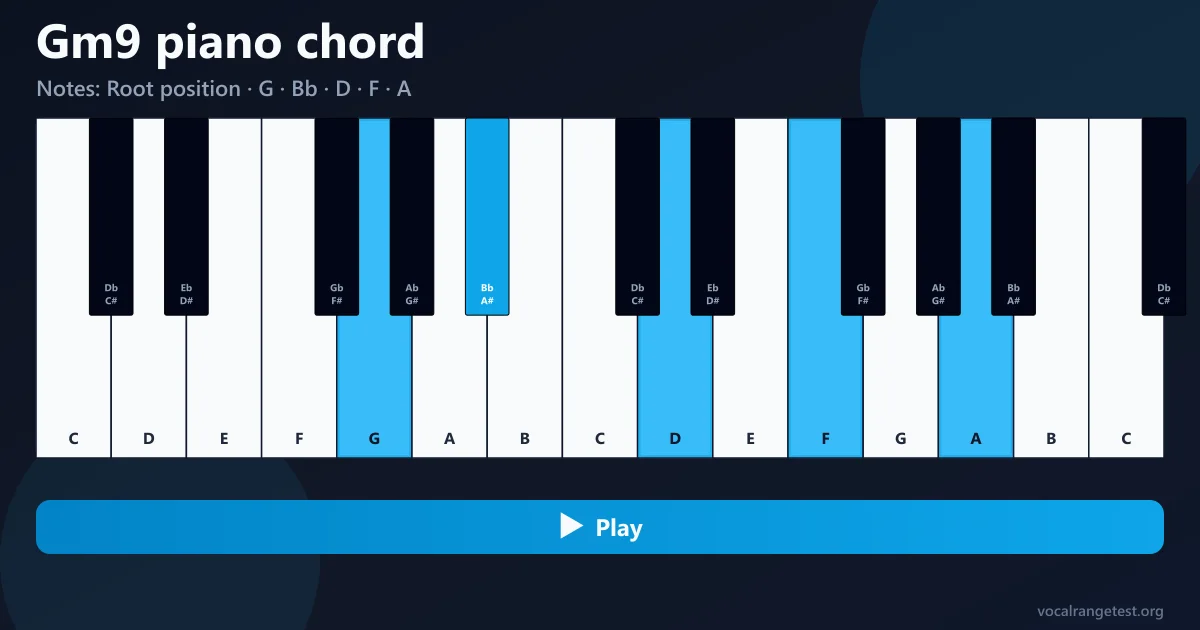
Notes: G · Bb · D · F · A
Voicing: 1 / 4
Root
Chord type
Root position & inversions
Two-hand voicing
Gm9 on piano: five notes that turn plain G minor into something warmer and more modern
If you need a gm9 piano chord you can actually use in a song, start with the notes and the sound—not a wall of theory. Gm9 is G–Bb–D–F–A. Think of it as a G minor triad with a flat seventh and a ninth stacked on top, or simply Gm7 with an A added. That single A is the color people hear as soft, late-night, or neo-soul, even when they cannot name the interval yet. This page is built for that practical loop: hear the full chord, split it into single notes, compare fingerings and inversions, then pick a shape that fits the groove you are playing.
What Gm9 is made of, and why it feels different from Gm or Gm7
Start with the three notes everybody already knows from G minor: G, Bb, and D. Add F and you get Gm7, which already sounds softer than a plain triad. Add A above that and you arrive at Gm9. The A sits a whole step above the root, so your ear often locks onto it as a gentle shine on top of a dark minor body. Unlike G9, which uses a B natural and feels more bluesy or dominant, Gm9 keeps the minor third (Bb). Unlike Gmaj9, which uses B and F#, Gm9 stays minor and uses F natural. If a chart says “Gm9” and your voicing suddenly sounds brighter or more tense than the track, you probably grabbed the wrong third or the wrong seventh. Getting those two notes right—Bb and F—matters more than spreading your hand as wide as possible.
On a keyboard, five notes in close position can feel crowded, especially for smaller hands. That is normal. Many players keep G and D in the left hand and place Bb–F–A (or F–A–Bb) in the right, or they drop one inner note when the arrangement is already dense. A gm9 chord on piano does not have to use every pitch in every bar. What matters is that the voicing still reads as minor-ninth color: the Bb for minor quality, the F for that seventh pull, and the A for the ninth. Once you can hear those roles, you stop memorizing a single claw shape and start choosing shapes that leave room for the melody.
Hear the stack before you memorize it
Play the full Gm9 block, then arpeggiate G–Bb–D–F–A so your ear learns which note adds the soft ninth color instead of guessing from a silent diagram.
Use positions and inversions on purpose
Root position is clear for learning. Inversions and slash forms such as Gm9/F help the bass line move while the right hand keeps the same color.
Built for song work, not only naming
We designed these pages so you can check sound, fingering, and voicing choices in one place—then take a shape that actually fits the groove you are playing.
Listen online, break the chord apart, and compare positions with inversions
Static charts tell you note names. Here you can click to hear Gm9 as a full chord or as separate tones, study fingering diagrams, and move through voicing positions and inversions without leaving the page.

Sound first, then hands, then musical choice
Our goal with this product is simple: stop the loop of opening five tabs for notes, a YouTube demo, and a fingering screenshot. You hear Gm9, break it into notes, check left/right fingerings, then compare root shapes with inversions so the next take in your song feels intentional.
- Click-to-hear piano sound for the full Gm9 voicing
- Note-by-note breakdown so you can isolate the ninth (A)
- Fingering diagrams for practical left- and right-hand placement
- Multiple positions, not only one textbook cluster
- Inversions and slash-bass forms for smoother voice leading
How to play Gm9 chord on piano

1. Find the G minor core first
Place G, Bb, and D so the minor sound is solid. If this triad already feels unclear, the full ninth chord will only hide the problem. Slow down until those three notes feel even under your fingers.

2. Add F, then add A
Slide in F to make Gm7, listen, then add A for Gm9. Adding one note at a time trains your ear to hear what the ninth actually contributes, which helps when a chart later writes Gm7 or Gm9 interchangeably.

3. Use the hear and breakdown tools
Play the full chord once, then trigger the note-by-note breakdown. Match what you play to what you hear. If one pitch sticks out, check whether you grabbed B instead of Bb, or F# instead of F.

4. Pick a fingering you can repeat
Use the diagrams as a starting point, then adjust for hand size. A clean repeated shape at medium tempo beats an impressive stretch you cannot land twice in a row.

5. Try an inversion before you force root position
If the bass already covers G, an inversion can keep the harmony while your right hand stays closer to the melody. Compare a couple of positions here, then choose the one that moves least from the previous chord.
6. Drop it into a real progression
Common homes for Gm9 include G minor grooves, Bb major songs (as vi), and F major progressions (as ii). Play Gm9 into C7 or C9, or into Ebmaj7, and listen for whether the A wants to resolve or simply color the bar.