
Bm9 chord
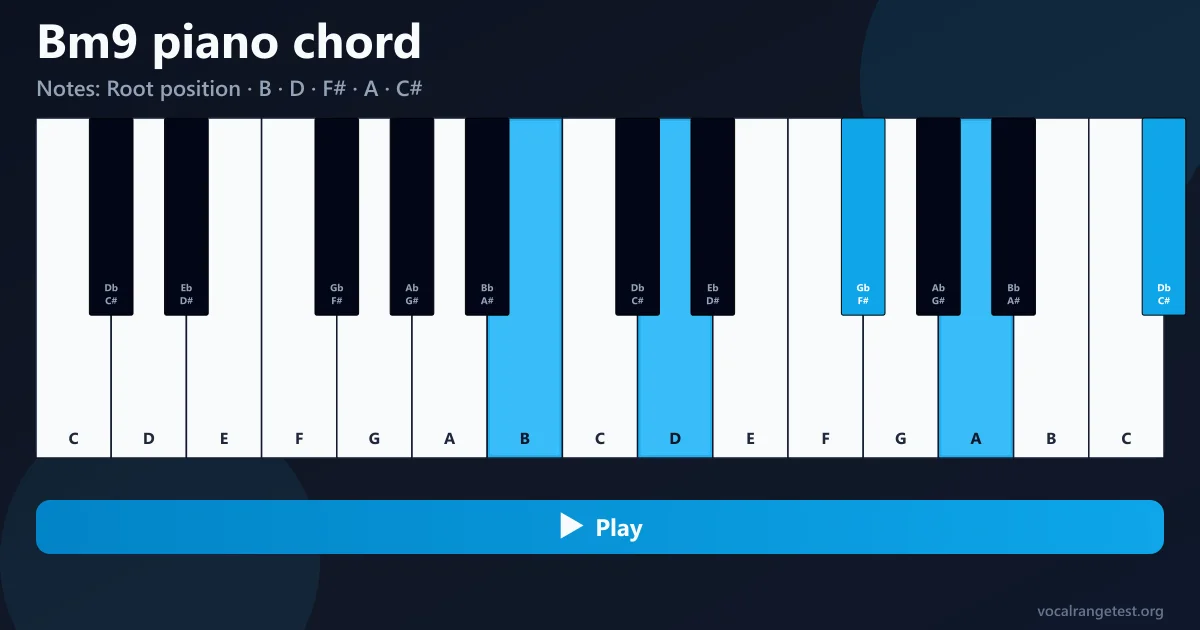
Root position: The most common shape: the lowest note is the root named in the chord, with the other chord tones stacked above it.
Notes: B · D · F# · A · C#
Voicing: 1 / 4
Root
Chord type
Root position & inversions
Two-hand voicing
Bm9 piano chord: the color that sits between sadness and calm
If you typed bm9 piano chord into a search bar, you probably already know Bm or Bm7, and now a chart is asking for that extra note. Bm9 is B minor with a ninth on top: B, D, F#, A, and C#. On paper it looks crowded. Under your hands it often feels lighter than a plain minor triad, because the C# softens the darkness without turning the chord major. This page is built for that exact gap between “I can name the notes” and “I can make it sound right.” You can hear the full voicing online, split it into single tones, check fingerings, and flip through positions and inversions without jumping between tabs.
What people actually want when they look up Bm9
Most searches for a bm9 chord on piano are not theory homework. They are practical. A lead sheet says Bm9. A tutorial flashes the symbol for half a second. A producer friend says “make that minor chord wider.” You need the notes, a playable shape, and a clear sense of what the chord is supposed to feel like. Bm9 usually reads as reflective, slightly jazzy, and less blunt than Bm. The minor third (D) keeps the sadness. The flat seventh (A) adds that familiar minor-seventh pull. The ninth (C#) is the detail that makes the harmony breathe. Once you hear that C# against B and D, the whole reason for the symbol clicks.
Bm9 shows up a lot in neo-soul, R&B, chill pop, and ballad writing where a plain Bm would feel too plain and a major chord would feel wrong. In the key of B minor it can sit as a tonic color with more air. In D major it can color a vi chord without sounding dusty. Functionally it is still a B minor harmony; the ninth is color, not a total identity change. That is why learning it on piano is less about memorizing five random keys and more about hearing how those five notes share one mood. Our tools lean into that: online piano sound so you are not guessing from a silent diagram, chord breakdown so you can isolate each tone, and inversion pages so the same harmony can sit differently under a melody or bass line.
Hear it before you force the shape
A five-note minor ninth can look intimidating. One click of online audio tells you the target sound, so practice becomes matching a color, not chasing a picture.
Break the chord apart when it feels muddy
If the voicing blurs, switch to arpeggio breakdown. You will hear whether D is weak, whether A is late, or whether C# is drowning the rest.
Positions and inversions are part of the same lesson
Root position is only one answer. On this page you can move through inversions and alternate placements so Bm9 fits the register you actually need in a song.
Why this Bm9 page is different from a static chord chart
We built these chord pages because static images leave too many questions unanswered. Can I hear it? Which note is muddy? What if the bass needs A instead of B? Here you get online listening, chord breakdown, fingering charts, positions, and inversions in one place.

From symbol on a page to sound in your ears
Play the full Bm9, then hear it note by note. Compare root position with inversions while the fingering view stays tied to what you are hearing. That loop—see, hear, adjust—is the reason this product exists.
- Online piano audio for the full chord
- Chord and arpeggio breakdown so every note is clear
- Fingering charts for practical hand placement
- Positions and inversions on the same page
- Fast A/B listening when you are choosing a voicing for a song
How to play bm9 chord on piano without fighting your hands

1. Start from Bm7, then add the ninth
If five notes feel like too much at once, build Bm7 first: B, D, F#, A. Get that stable. Then add C# above or tucked into the right hand. Mentally, Bm9 is “Bm7 plus one more color,” not a brand-new alphabet of keys.

2. Know exactly what each note is doing
B is the root. D is the minor third—without it, the chord loses its minor identity. F# is the fifth and the glue. A is the flat seventh. C# is the ninth, the soft lift. When something sounds wrong, name the missing or overplayed note instead of restarting from scratch.

3. Use online hearing to set the target color
Play the page audio once before you even worry about speed. Bm9 should feel open and slightly bittersweet, not crushed. If your take sounds darker and thicker than the reference, you may be over-voicing the low end or burying C#.

4. Break it down when balance falls apart
Switch to arpeggio listening and play along one tone at a time. Many players smash the outer notes and forget the inner ones. A quiet, even arpeggio almost always cleans up the block chord that follows.

5. Choose a fingering that leaves you an exit
A fingering that only works in isolation is not useful. Test shapes that can move toward E minor, F# minor, A major, or D major without a full hand reset. The fingering chart on the page is a starting point; your progression decides the final choice.
6. Learn an inversion before you need it in a song
Root-position Bm9 can sit low and heavy. An inversion can keep the same harmony while clearing space for vocals or a bass line. Browse the inversion options here, listen to each one, and pick by ear for the register of your arrangement—not by which diagram looks neatest.

7. Practice Bm9 inside a short loop, not as a museum piece
Try two bars of Bm9 into two bars of E minor or A major. Listen for voice leading. The point of this chord is motion and mood, so the fastest way to own it is to hear it arrive and leave, using the same online tools you used to learn the isolated shape.